


Día de los Muertos
Perhaps this lifetime it’s not long enough to love some.
I choose to believe, I choose to grief with my culture, my religion and my love. Wouldn’t be sad to know you can only love someone for just a certain amount of years? To love someone even after they are gone is the greatest honor, a lifetime wasn’t enough, so I choose to love you beyond that, beyond the known and unknown. I chose to believe you are waiting for me, it might be selfish but it keeps the emptiness filled. A picture isn’t enough, so I dream just to hear your voice and hopefully one day my heart can beat the way it used to.
Día de Muertos gives me that privilege, it gives me a day, just one day a year of believing that you are coming back, that you can see me, see how much I miss you; celebrate what you loved with the people that loved you the most.
It took me years to come to a conclusion: Do I believe in the afterlife? According to Catholicism we all go to heaven, according to ancient Mexicas belief we all go to the Mictlan. In both scenarios we find each other, and my love for you seals the deal. I choose you, not the idea of the afterlife, but the idea you, the idea of a forever between our names.
Ana.
____________
Día de Muertos didn’t start as we see it today, with altars full of marigolds and sweet bread. Its roots go deep into the traditions of Mexico’s indigenous peoples: Mexica, Maya, Purépecha, and many other groups who already had rituals to honor and accompany their dead. For them, death wasn’t an end, but a transition. The soul traveled different paths — like the Mictlán for the Mexica — and needed guidance, offerings, and care. The Mictlán was envisioned as a complex underworld, a realm that the soul had to navigate in order to reach its final resting place. This journey was not instantaneous; it involved challenges and trials, and the living could help by leaving offerings, guiding the spirits, and honoring their memories. Dogs, particularly the sacred xoloitzcuintles, were believed to accompany the deceased on this journey, waiting patiently and guiding their human companions or even their soulmates through the trials of the underworld. The Mictlán was not only a physical path but a symbolic one: it represented the journey of the soul, the trials of life and death, and the enduring connection between those who have passed and those who remain. Through rituals, altars, and offerings, the living actively participated in this journey, making love, memory, and remembrance tangible.
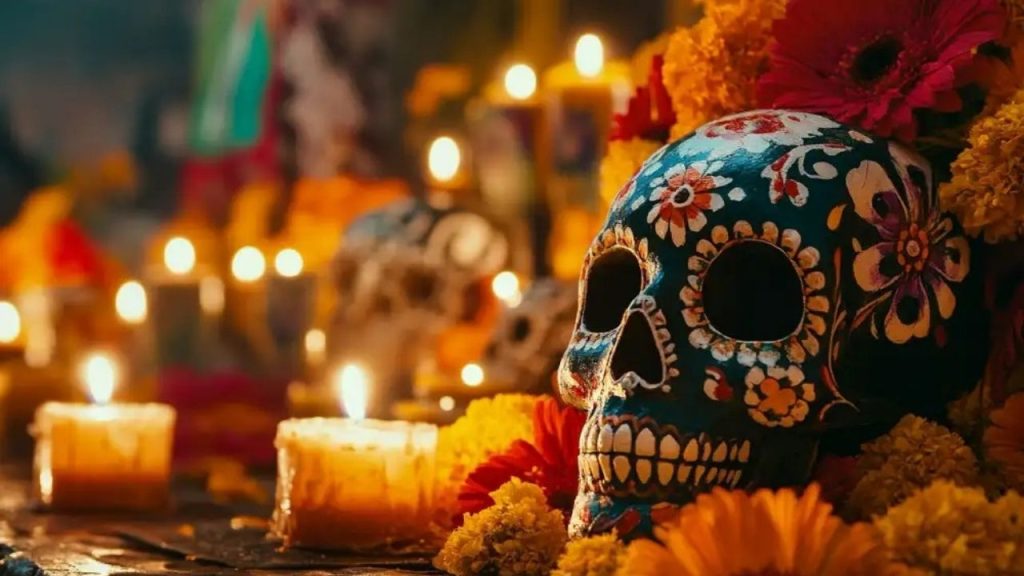
Today, Día de Muertos is celebrated by over 90% of Mexicans, spanning urban and rural areas alike. Millions of marigolds bloom in homes and streets, often numbering tens of millions of flowers nationwide, guiding the spirits back to their families. Candles — sometimes hundreds per altar — light paths in homes and cemeteries, while families gather in cemeteries, with estimates of more than 5 million people visiting Mexico City’s main cemeteries. Many communities also attend special masses in churches, blending Catholic prayers for the departed with the vibrant indigenous traditions of remembrance. These numbers reflect not just participation but the depth of feeling, as communities across the country continue to honor loved ones with devotion and care.
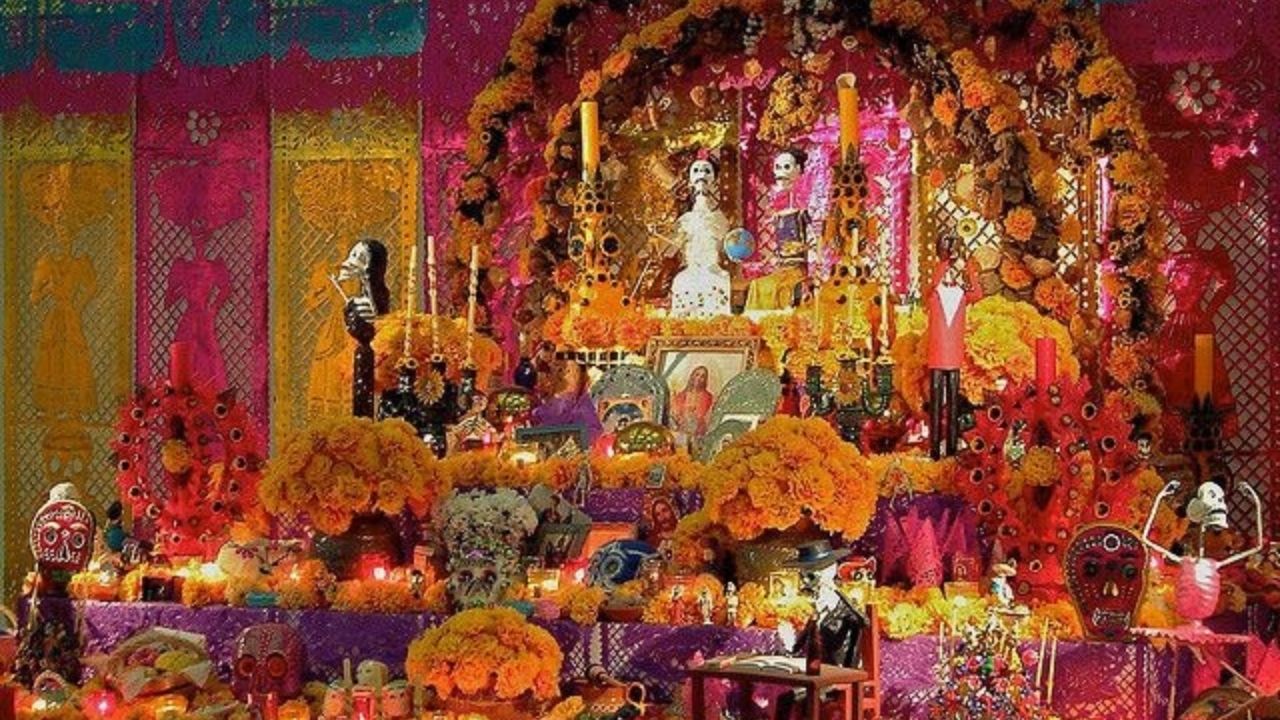
When the Spanish arrived, everything changed. Many of these practices were threatened, but what actually happened was something else: a blending. Catholic celebrations of All Saints’ and All Souls’ Days mixed with indigenous rituals, creating what we now know as Día de Muertos. It’s a clear example of Mexico’s unique cultural resilience and syncretism: people didn’t let go of their traditions; they adapted them, hid them under “acceptable” forms, and preserved them. Today, every altar combines pre-Hispanic symbols — bright marigolds, incense, fruits, and favorite foods — with Catholic elements like candles, crosses, and holy images, creating a tapestry of Mexico’s history, spirit, and love.
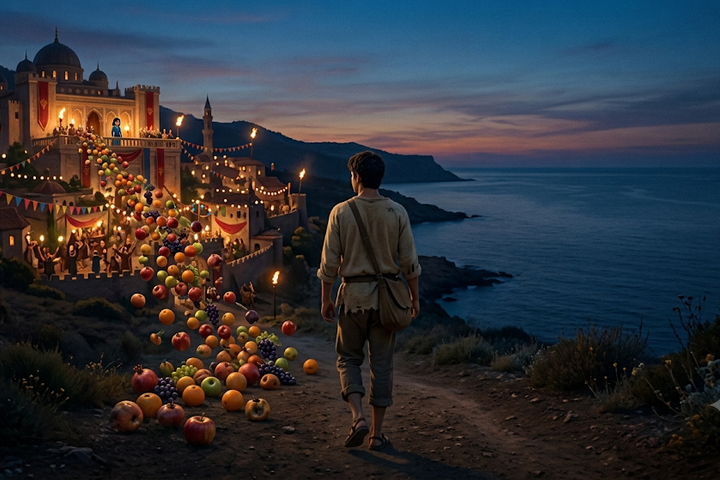
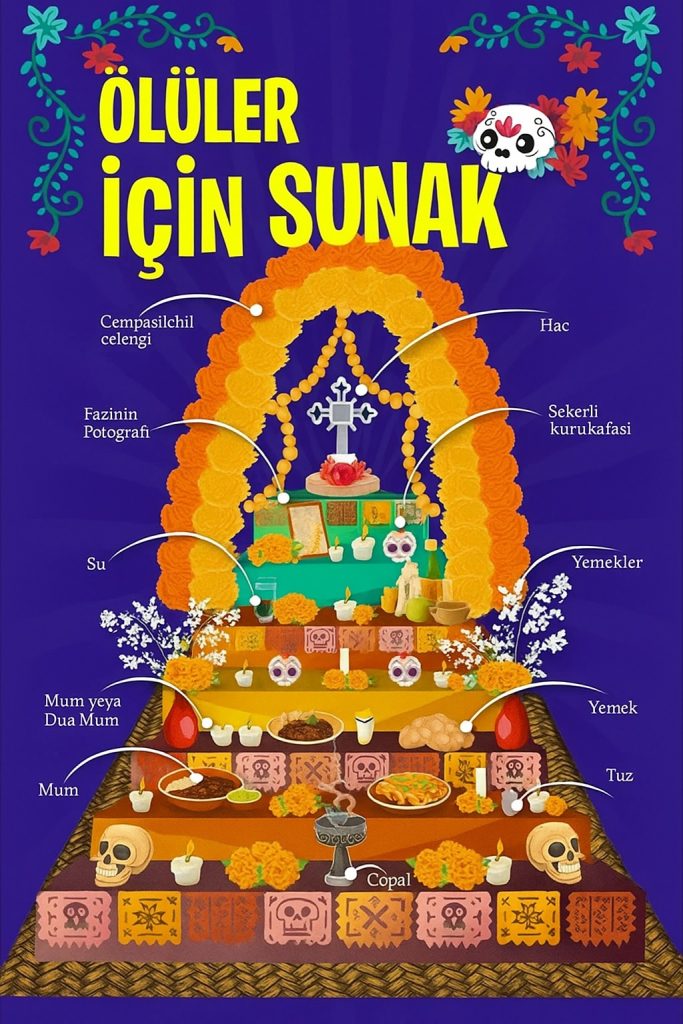
Altars, or ofrendas, are perhaps the heart of the celebration. Every object carries love and intention: marigolds to guide the soul, water to quench its thirst, salt to purify, bread to share, candles to light the way. Pan de muerto, sweet and fragrant, is shared among family and placed on the altar to welcome the departed. Toys, personal items, photographs, letters, and even small trinkets tell stories of the people who have passed, reminding the living of the love they left behind. For one day, we believe they return to sit with us, to share the table, the stories, the laughter, and the warmth of our hearts. Día de Muertos is not only about memory; it is about keeping love alive, letting it flow across time and space, embracing those we miss, and celebrating the joy they brought into our lives.
Across Mexico, every region celebrates in its own vibrant way. In Oaxaca, altars explode with colors and intricate paper crafts called “papel picado“, fluttering like laughter in the wind. Families cook together, preparing mole, tamales, and other dishes that fill the home with smells that evoke memory and belonging. In Michoacán, cemeteries are transformed into glowing gardens of candlelight and marigolds, with families sitting all night sharing stories, music, and even picnics to honor the dead. In Mexico City, streets fill with parades of skeletons, dancers, and giant puppets — a joyful reminder that death is not the end, but part of life’s cycle.
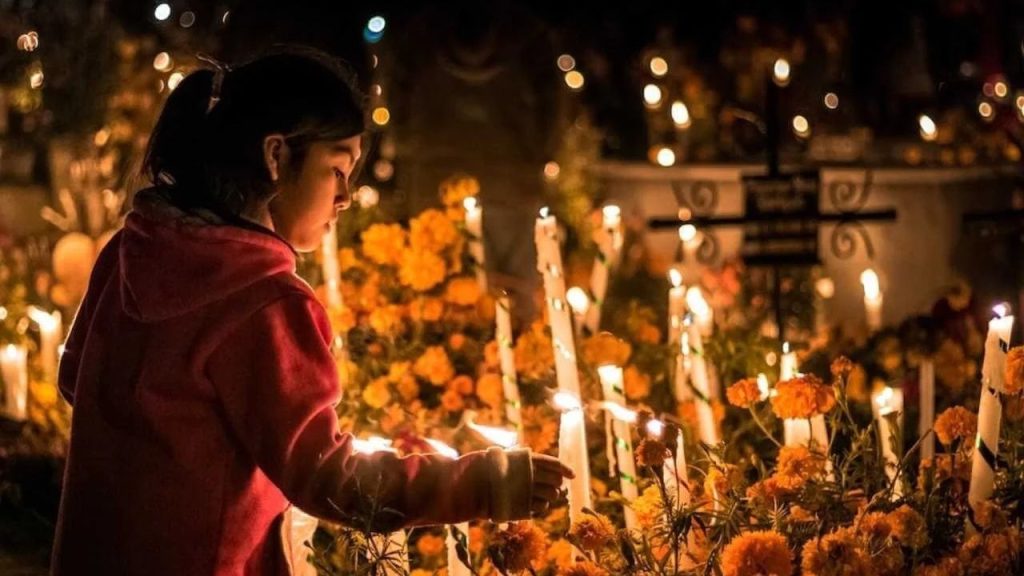
Even small towns in Mexico have their own traditions: in Pátzcuaro, locals float candles on the lake to guide the souls of the departed; in Puebla, families decorate every room of the house, inviting the spirits to enjoy the warmth and comfort of the home they once knew. Across the country, the act of remembering is not solemn or sad alone — it is festive, it is colorful, and it is filled with love. It is a celebration of family, of bonds that no distance or time can break, of life lived and life remembered.
Día de Muertos also reminds us of Mexico’s colonial past, where much of indigenous culture was minimized. Today, with globalization, the tradition risks becoming just a tourist spectacle or a costume. Some people create altars purely as decoration, without understanding their meaning. But at heart — in Mexican homes and communities — the essence remains alive: memory, reunion, family, warmth, and above all, love that endures beyond death.
Día de Muertos is Mexico’s gift to the world, a love letter: A celebration of life, of love, and of the enduring bonds that tie us to those who came before us. It is a festival where color, aroma, music, and food become vessels of memory, and where, for one day, love can cross the boundary between worlds.