


The global energy transition is more than a technological shift from fossil fuels to renewable energy sources. It represents a paradigm shift (Kuhn, 1962) that challenges how societies produce, organize, and govern energy. Because every energy system is embedded in particular technologies, infrastructures, institutions, and forms of ownership, changing the source of energy also has the potential to reshape political and economic power. The central question, therefore, is not only how energy is produced, but also who controls it, who benefits from it, and how its governance is organized.
This debate takes place against the backdrop of a broader civilizational crisis. Climate change, biodiversity loss, and growing social inequalities expose the limits of a development model sustained by overproduction, hyperconsumption, and dependence on fossil fuels. As scientists warn that the planet is approaching critical tipping points (Lenton et al., 2008), the energy transition presents two contrasting possibilities. It may simply replace fossil fuels with renewable technologies while leaving existing structures of power largely intact, or it may become a genuine paradigm shift capable of transforming the institutions, relationships, and values that sustain contemporary societies.
This article argues that renewable technologies are not inherently democratic or transformative (Winner, 1980). Their political consequences depend on how they are governed, who owns them, and how access to energy is organized. From this perspective, the energy transition should not be understood merely as a technological substitution but as a struggle over the reconfiguration of geographies of power.
The article examines how the shift from fossil energy stocks to renewable flows reshapes geographies of power, using the Utility Death Spiral to illustrate the political conflicts that emerge during this transition before considering what a genuinely regenerative energy paradigm might require.
From Stocks to Flows: Materialities and Geographies of Power
The energy transition is often described as the replacement of fossil fuels with renewable energy sources, yet it entails a much deeper transformation. For more than a century, modern societies have been organized around coal, oil, and natural gas, shaping infrastructures, cities, industries, and patterns of consumption. To understand why replacing these resources has such far-reaching consequences, it is first necessary to examine the material characteristics on which fossil and renewable energy systems are built.
Fossil fuels are concentrated underground reserves formed over millions of years. Their use depends on extensive infrastructures for extraction, transport, refining, and combustion that connect production sites with centres of consumption. Renewable resources, by contrast, must be captured where and when they are available, fundamentally changing how energy is produced, distributed, and governed.
More specifically, the transition to renewable energy involves far more than changing energy sources. It requires moving from an energy system based on concentrated stocks of coal, oil, and natural gas to one that relies on continuous flows of solar radiation, wind, and hydrological cycles (MacKay, 2009). This distinction has important political implications, because Stocks are concentrated, transportable, and controllable, allowing energy production to be organized through centralized infrastructures and global supply chains. Flows, by contrast, are geographically dispersed and territorially embedded. They can often be captured much closer to where energy is consumed, reducing dependence on long-distance transport and centralized refining systems.
Building on scholarship showing how energy materialities shape political and territorial relations (Mitchell, 2011; Bridge et al., 2013), this article argues that energy systems do more than distribute energy—they also produce geographies of power. Every energy system creates relationships between territories, infrastructures, institutions, and social actors that determine who controls energy production, who participates in decision-making, and who captures its benefits (Bridge & Le Billon, 2017).
The fossil-fuel regime illustrates this dynamic clearly. Although large oil reserves are concentrated in the Persian Gulf, political and economic power extends far beyond the places where oil is extracted. Crude oil circulates through strategic checkpoints such as the Strait of Hormuz and the Suez Canal before reaching major refining and trading hubs, then supplying centres of consumption across Europe, North America and East Asia. As Mitchell (2011) argues, states and corporations controlling extraction, transport, refining, and distribution acquire the ability to influence global markets, regulate access to energy, and capture the economic value generated throughout the system.
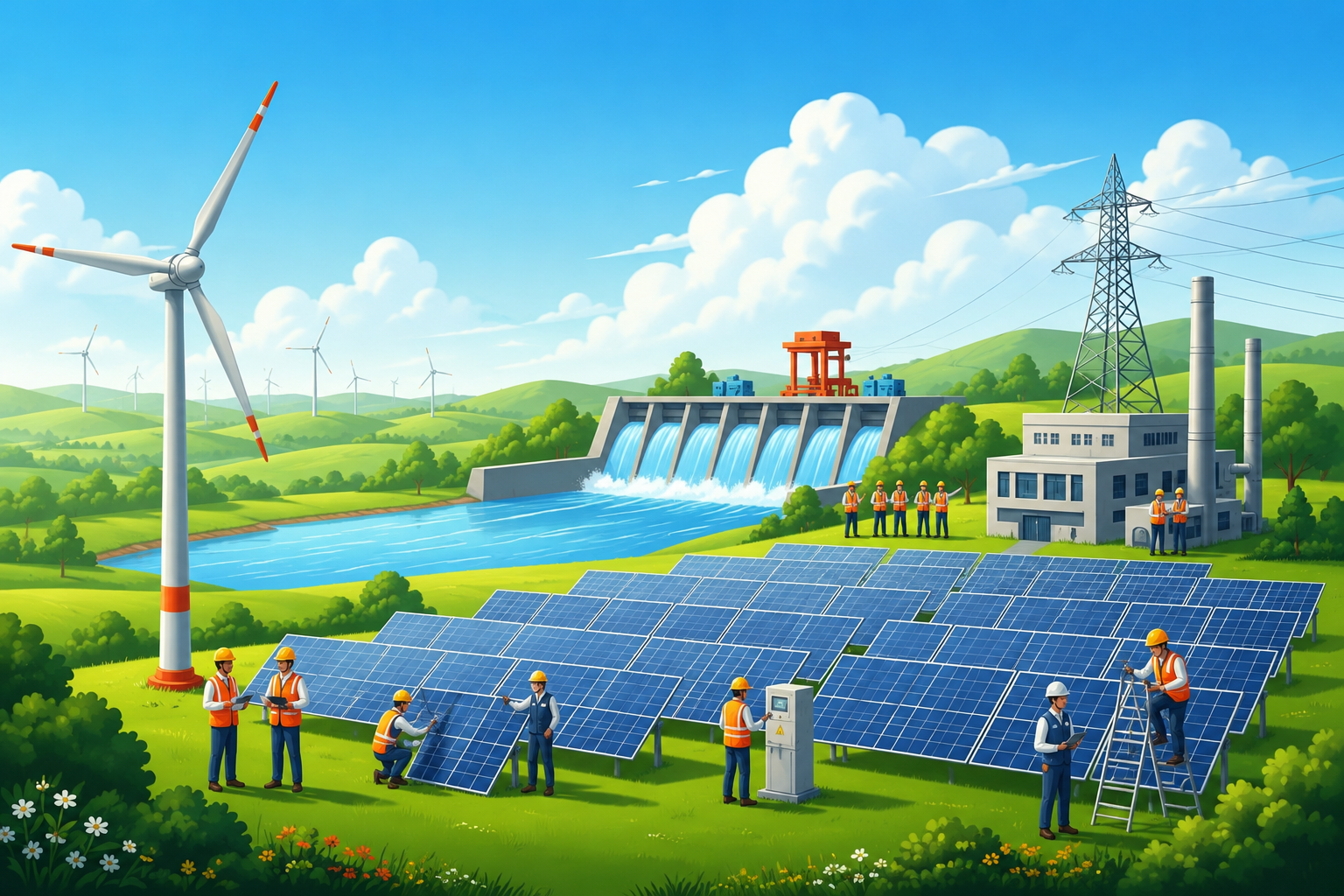
Renewable energy reorganizes this geography because it changes not only the source of energy, but also how energy is captured, converted, transported, stored, distributed, and governed. In practice, solar radiation, wind, and water can often be captured, converted, and consumed within the same territory. This reduces dependence on long-distance transport networks while placing territorial governance at the center of the energy transition, since renewable infrastructures must be deployed where these natural energy flows occur—often in territories that are already inhabited and governed by local communities.
Yet the decentralizing potential of renewable technologies is not guaranteed. Maintaining current levels of energy consumption requires intermittent flows to be transformed into usable stocks through storage technologies such as batteries, hydrogen, pumped hydro storage, and smart grids (Smil, 2010). The political challenge arises when these storage infrastructures become concentrated in the hands of a small number of actors, allowing decentralized renewable generation to be incorporated into centralized systems of ownership, control, and capital accumulation.
In this case, the widespread distribution of solar panels and wind turbines does not by itself guarantee a more democratic distribution of ownership or power. If the transition continues to unfold within prevailing economic logics, renewable technologies may become new sources of profitability without fundamentally altering existing power relations. Users would still depend on electricity networks, storage systems, and energy services controlled by states, large corporations, or financial actors. Rather than transforming existing geographies of power, the transition may simply reconfigure them, reproducing an energy system in which citizens remain primarily consumers instead of becoming co-owners, co-governors, and active participants in shaping how energy is produced and governed.
A regenerative transition, in contrast, offers a different possibility. Its objective is not merely to decarbonize energy production but to transform the social, economic, and political relationships that sustain it. In sum, the transformative potential of renewable technologies depends on how societies choose to govern them, what purposes they serve, and the futures they are intended to build.
Renewables and the Reconfiguration of Geographies of Power
The distributed nature of solar radiation and wind gave rise to one of the most compelling promises of the energy transition: that energy production could become more democratic. Unlike fossil fuels, renewable resources can often be harnessed by a wide range of actors and at relatively small scales. Households can install rooftop solar panels, communities can establish energy cooperatives, and municipalities can generate part of their own electricity. In this vision, distributed generation increases citizen participation, strengthens local autonomy, and reduces dependence on centralized electricity providers.
Yet this promise soon collided with the institutional logics of existing energy systems. As rooftop solar installations expanded, households purchased less electricity from conventional electric utilities (companies responsible for generating, transmitting, and distributing electricity). At the same time, many began exporting surplus electricity back to the grid through net-metering schemes, reducing their electricity bills and, in some cases, generating additional income. As electricity sales declined, utilities faced growing difficulties covering the costs of maintaining the grid and operating the electricity system on which all users—including those producing their own electricity—continued to depend.
This tension became known as the Utility Death Spiral (Castaneda et al., 2017). As distributed generation expanded, the traditional business model of electric utilities came under increasing pressure, prompting regulators to redesign tariffs and compensation mechanisms in an effort to preserve the financial sustainability of the electricity system (Athawale & Felder, 2022). In Spain, these responses included restrictions on self-consumption, widely known as the “sun tax.” In the United States, states such as California and Arizona reduced compensation for surplus electricity exported to the grid, while Australia introduced time-of-use tariffs and differentiated export pricing for distributed solar generation.
From a technical perspective, these reforms were justified because even households generating their own electricity continued to rely on the grid whenever renewable generation was insufficient. Yet the significance of the Utility Death Spiral extends far beyond questions of tariff design or utility finance. It reveals that distributed renewable generation has the potential to disrupt the centralized relationships through which energy has traditionally been produced, governed, and monetized. In doing so, it challenges the geographies of power that have long underpinned the fossil-fuel regime.
Regulatory responses such as the restructuring of net-metering schemes can therefore be understood not only as technical adjustments but also as efforts to preserve—or redefine—those geographies of power under new technological conditions. The energy transition is thus not simply a matter of replacing fossil fuels with renewable technologies. It is also a political struggle over who controls energy production, who benefits from it, and through what forms of ownership and governance access to energy is organized.
From this perspective, two contrasting trajectories become visible. One extends the centralized logic of the fossil-fuel regime, where energy production remains concentrated in large utilities, infrastructures are managed hierarchically, and citizens participate primarily as consumers dependent on systems over which they exercise little influence. The other points toward a more distributed energy system, in which households, communities, cooperatives, and local governments become producers, owners, storage providers, and co-governors of energy. The distinction between these futures is not technological. Whether renewable technologies reproduce or transform existing geographies of power is ultimately a political question.
Towards a Regenerative Energy Paradigm
The central lesson of the energy transition is that technologies alone do not transform societies. Although renewable energy changes the material basis of energy production, its political potential depends on the institutions that govern its ownership, distribution, and use. A society may replace oil with solar panels and wind turbines while leaving intact the same patterns of economic concentration, centralized power, and unequal access that characterized the fossil-fuel regime.
But, what if a genuine paradigm shift required more than technological substitution? What if responding to the climate crisis also demanded transforming how we understand well-being, consumption, and our relationship with the resources that sustain life?
The energy transition cannot fulfill its transformative promise while remaining tied to an economic model of perpetual growth. Renewable generation does not eliminate planetary limits or the need to question an economy based on ever-increasing energy consumption.
From this perspective, a paradigm shift requires redefining both energy and development. Energy should not be treated simply as a commodity designed to satisfy unlimited demand but as a social good whose governance is guided by principles of sufficiency, equity, and ecological regeneration (Kallis et al., 2025). It also requires moving beyond the extractive logic that now shapes both fossil fuels and critical mineral supply chains in renewables. Without institutional change, the transition risks reproducing old forms of environmental degradation, labor exploitation, and territorial inequality through new technologies.
A regenerative transition points in a different direction. Rather than organizing the extraction of strategic minerals to sustain ever-expanding patterns of individual consumption, it would prioritize collective storage infrastructures, community energy systems, circular material flows, and the reuse and recycling of critical resources. Its objective would no longer be limited to decarbonizing the economy but to regenerating the ecological and social conditions upon which life depends (Sovacool & Dworkin, 2015).
Ultimately, a paradigm shift is not simply about replacing energy stocks with renewable flows. Every energy transition is also institutional, political, cultural, and epistemological. Only when new energy materialities are accompanied by new forms of governance, ownership, participation, and sufficiency can they transform not only the energy system but also the ways in which societies organize power and imagine the future.
Energy futures are therefore not the inevitable outcome of technological innovation. They are political choices that begin in the present. The question is then, not only how we will produce the energy of tomorrow, but what kind of society we choose to build through it.
References
Athawale, R., & Felder, F. A. (2022). Electric utility death spiral: Revisited in the context of tariff design. The Electricity Journal, 35(1), 107062.
Bridge, G., Bouzarovski, S., Bradshaw, M., & Eyre, N. (2013). Geographies of energy transition: Space, place and the low-carbon economy. Energy Policy, 53, 331–340.
Bridge, G., & Le Billon, P. (2017). Oil. John Wiley & Sons.
Castaneda, M., Franco, C. J., & Dyner, I. (2017). Evaluating the effect of technology transformation on the electricity utility industry. Renewable and Sustainable Energy Reviews, 80, 341–351.
Kallis, G., Hickel, J., O’Neill, D. W., Jackson, T., Victor, P. A., Raworth, K., … & Ürge-Vorsatz, D. (2025). Post-growth: The science of wellbeing within planetary boundaries. The Lancet Planetary Health, 9(1), e62–e78.
Kuhn, T. S. (1962). The Structure of Scientific Revolutions. University of Chicago Press.
Lenton, T. M., Held, H., Kriegler, E., Hall, J. W., Lucht, W., Rahmstorf, S., & Schellnhuber, H. J. (2008). Tipping elements in the Earth’s climate system. Proceedings of the National Academy of Sciences, 105(6), 1786–1793.
MacKay, D. J. C. (2009). Sustainable Energy – Without the Hot Air. UIT Cambridge Ltd.
Mitchell, T. (2011). Carbon Democracy: Political Power in the Age of Oil. Verso.
Smil, V. (2010). Energy Transitions: History, Requirements, Prospects. Praeger.
Sovacool, B. K., & Dworkin, M. H. (2015). Energy justice: Conceptual insights and practical applications. Applied Energy, 142, 435–444.
Winner, L. (1980). Do artifacts have politics? Daedalus, 109(1), 121–136.